
See an opening unfold
Follow two sample opening lines and see how the pieces develop. These are examples, not forced replies or a complete repertoire.
Press play to watch the moves, or step through one at a time.
Move 0 of 7 · 1. e4 e5 2. Nf3 Nc6 3. Bc4 Bc5 4. O-O
Start here
The quick answer
A beginner opening plan is to influence the center, develop pieces toward useful squares, protect the king, and connect the rooks when the position allows. These are guiding ideas, not moves that must be played in a fixed order. A legal move can still be slow or unsafe, and a familiar opening can change when the opponent chooses something unexpected. Learn why a move helps before memorizing its name or sequence.
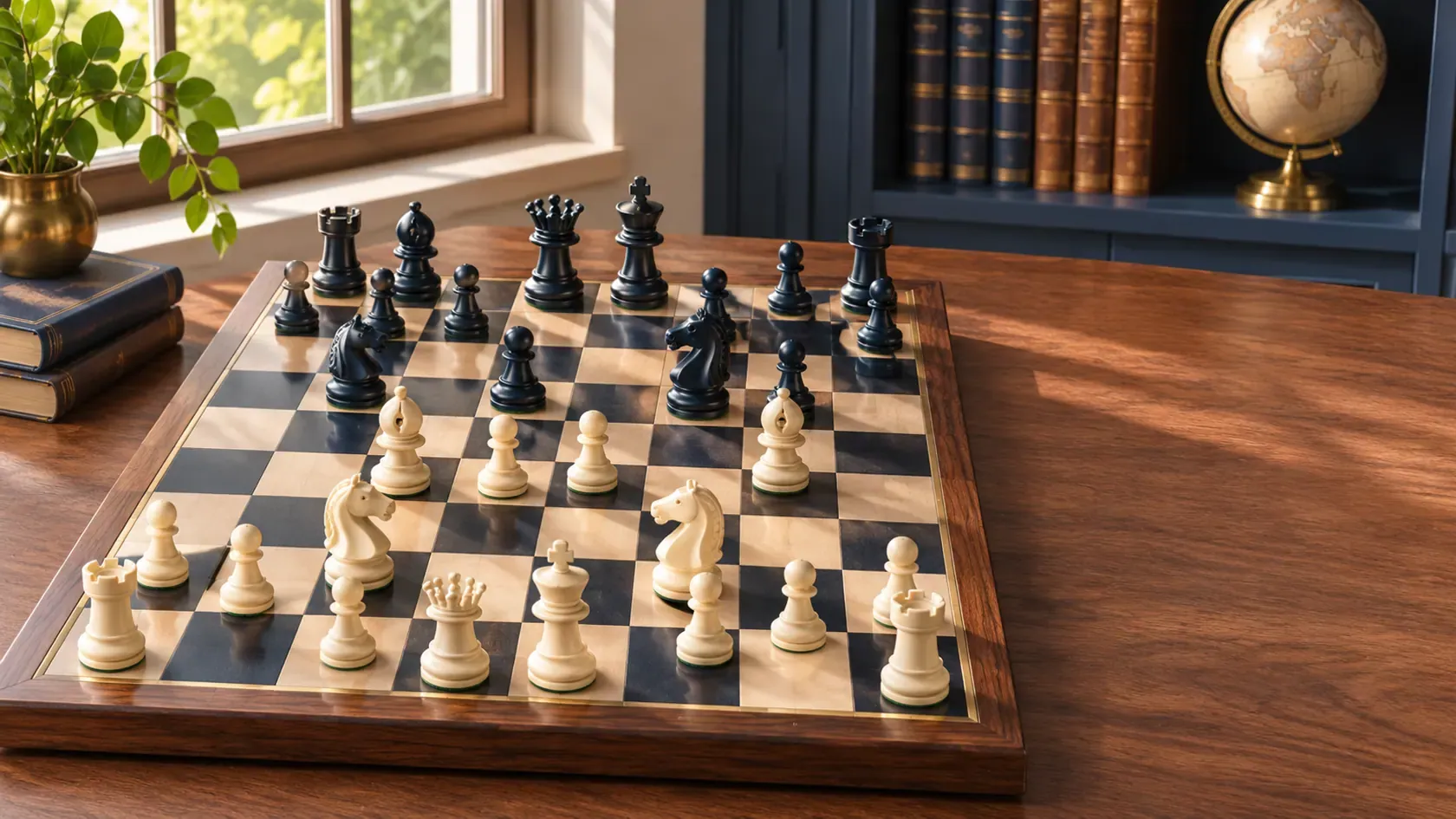
Why opening principles help a beginner
The opening is the first phase of the game, when both players bring pieces into the position and begin competing for useful squares. A beginner may see hundreds of named openings online and assume that success requires remembering a long move list. That is rarely the best first step. Principles help a student ask why a move makes sense: does it affect the center, develop a piece, protect the king, or respond to a threat? They provide a framework for unfamiliar positions instead of a script that works only when the opponent follows the expected moves.
A principle is not a law. There are sound moves that break a general guideline because the position gives a concrete reason. A player may move a piece twice to win material, prevent a threat, or respond to a forced tactic. Castling may be delayed if it is unsafe or if a more urgent move is needed. A child who memorizes “never move the same piece twice” as an absolute rule can miss a legitimate opportunity. Teach principles as questions to consider, then calculate the opponent’s reply before deciding.
The center and the first pawn moves
The central squares e4, d4, e5, and d5 are useful landmarks for a beginner. A pawn move toward the center can influence squares where pieces may later develop. This does not mean every pawn should move immediately or that a player must occupy all four squares. The opponent is contesting the same space, and pawn moves can leave squares behind or open lines toward a king. Ask which central squares are controlled and what happens if an opposing pawn advances. The goal is to understand the tension rather than push pawns forward automatically.
An opening plan should also leave room for the pieces to move. Advancing several pawns while the knights and bishops remain at home can delay development and create targets. A student can compare two positions: one where a central pawn has moved and pieces have routes, and another where many pawns have advanced but the pieces are still blocked. Ask which position makes it easier to bring a rook into the game and protect the king. This is a visual discussion, not a fixed formula for every first move. The piece movement guide can help if a learner is still unsure which lines a piece can use.
Develop pieces toward useful squares
Developing a piece means moving it from its starting square to a place where it can influence the game. Knights and bishops usually need to leave the back rank before rooks and the queen can work together. A useful square gives a piece scope, supports the center, or helps prepare king safety. There is no single square that is correct in every opening. A knight might go to f3 or c3; a bishop’s route depends on which pawns moved and what the opponent is doing. Explain the purpose of the square rather than rewarding a memorized destination.
The opening replay above shows two sample lines, with a short explanation after each move. Pause or step backward to examine development, the center and king safety. These are teaching examples, not an engine score or a complete opening repertoire. A move that looks like development can still hang a piece or allow a forcing attack. Before choosing, ask what the opponent’s last move threatens and whether the destination is safe. The safe-square practice tool helps build that habit on simpler positions before adding opening decisions.
- Develop a piece with a purpose you can explain.
- Avoid blocking your own pieces without a clear reason.
- Check for an immediate threat before continuing your plan.
King safety and castling
Castling is a special move that can move the king toward a rook while bringing that rook closer to the center. It often helps a player place the king more safely and connect the rooks, but it is not automatically safe in every position. The route and destination must meet the chess rules, and the king cannot castle out of, through, or into check. Pawns in front of the king may also matter after castling. A student should learn the legal conditions and inspect the opponent’s pieces before assuming that castling solves every king-safety problem.
A useful beginner question is: “If I castle now, what lines or pieces point toward my king?” If the answer is unclear, examine the board with the coach. The player may need to address a threat before castling or choose a different side. King safety is not the same as moving the king as early as possible; it involves the pawn cover, open files, and attacking pieces. The current FIDE Laws of Chess define the legal conditions for castling, while a tournament’s published rules and director answer event-specific questions. Learn the rule from a current source and practise the physical move once before a competition.
Connect the rooks and avoid early queen adventures
Rooks are often more useful when they can see along an open file or work with one another. A beginner can think about connecting them as a sign that the king and minor pieces are no longer blocking the back rank. The queen may help with development, but bringing her out early can give the opponent a chance to gain time by attacking her with developing moves. This is not a ban on queen moves. A concrete threat or tactical opportunity can justify one; the question is whether the move has a reason and whether the queen can be challenged safely.
Instead of asking “where does the queen go in this opening?”, ask “what is my least active piece?” That often points toward a practical move that improves the position without creating a new target. A child can scan the knights, bishops, rooks, and king, then choose one piece that has not yet joined the game. If the opponent attacks the queen or a loose piece, respond to the actual threat. Opening principles are most useful when they help a player notice what the position needs now, rather than repeat a plan after the board has changed.
What if your opponent ignores the opening plan?
Your opponent may make a move that looks unusual, move the same piece more than once, or attack a pawn before you finish developing. The right response is not to punish every deviation automatically. First decide whether there is a real threat. Then check whether you can continue your plan safely or need to answer the danger. If a piece is attacked, see whether it has a safe square, whether it can be defended, or whether a stronger forcing move exists. A move is not bad just because it does not match a principle; the position decides.
This is where memorized lines often stop helping a beginner. If the student only remembers a sequence, an unexpected reply can make them feel lost. If they understand the purpose of developing, controlling central squares, and protecting the king, they can find reasonable candidate moves in a new position. The next task is to compare those candidates and look for tactical replies. Our tactics guide introduces patterns that can interrupt a normal opening plan. It is worth checking for forks, pins, and attacks before assuming a general principle is the priority.
How much opening theory should a child learn?
A young beginner usually benefits more from knowing the purpose of a few moves than from memorizing ten moves of an opening. A short line can be useful if it leads to a position the student understands and can play repeatedly. The coach can explain which piece is being developed, which central squares matter, and what to do when the opponent chooses another move. Learning the name of an opening is optional; the game is still decided by the decisions made after the opening position changes.
For a student who competes regularly, opening preparation can become more specific. They may choose a small set of responses, review games, and note positions that repeatedly cause trouble. That work should match the student’s experience, available study time, and goals. Do not prescribe the same repertoire to every child. The group versus private lesson guide explains how families can compare teaching formats; individual game analysis may fit one player, while a group discussion may help another hear different plans. Ask the coach what a realistic study routine looks like before adding a long list of variations.
A five-question opening review
After a short game, choose one opening position and ask five questions: Which central squares are contested? What pieces have developed? Is the king safe, or is there a reason to wait before castling? Which piece is least active? What does the opponent threaten next? These prompts keep the review connected to the board. They also make it possible to notice progress beyond whether a student remembers the first moves. A useful answer might be “my bishop had no open diagonal because I moved the wrong pawn,” or “I castled but did not check the rook’s attack on the file.”
Avoid turning the review into a list of everything the learner did wrong. Select one decision, replay it, and compare two candidate moves. If the student can explain why one move develops a piece or prevents a threat, the discussion has a concrete result. Record one question for the next class rather than trying to resolve every opening detail at once. The weekly practice planner can hold that review in a short practice block. A coach can then connect the student’s own game to a small, useful opening idea.
Turn principles into a repeatable habit
Before each opening move, ask what the last move changed. Name one candidate that develops a piece or influences the center. Check whether it leaves a piece undefended or exposes the king. If the opponent has a forcing threat, answer it before continuing a plan. This short routine combines principle with calculation. It is more reliable than choosing a move because a familiar name appeared in a video. Use the opening replay above to pause after each move and ask those questions without a clock or a rating.
Use a real game in the next lesson and focus on the first point where the student stopped understanding the position. The coach can explain the idea, then invite the child to find another move that serves a similar purpose. Signa offers level-based online group classes and individual coaching information for families comparing a suitable next step. A free assessment can help identify whether the student needs more work on movement, safety, or opening decisions. No opening system can guarantee wins; a clear thinking process gives the learner a sounder way to meet unfamiliar replies.
Keep it practical
What to take with you
- Use principles to find candidate moves, then check the opponent’s reply.
- Develop knights and bishops with a reason; avoid moving the same piece repeatedly without need.
- Treat opening study as a way to reach playable middlegames, not as a memorization contest.