
Start here
The quick answer
Small-group chess lessons can suit a child who enjoys peer games, discussion, and hearing different ways to solve a position. Private coaching can suit a student who needs extended attention on individual games, questions, or a focused goal. Start with your child’s learning needs and preferences, then compare the instructor, group placement, schedule, session length, and full cost. Ask how the academy handles a mismatch and who will teach the class.
Begin with the student’s next learning need
Before choosing a format, describe what the student needs next. A new player might need patient explanations, a chance to practise legal moves, and a friendly way to ask questions. A tournament player might need to review personal games, prepare for a specific event, or work on a recurring endgame. Age and rating can help with placement, but they do not reveal whether a child prefers to think aloud with peers or needs more quiet time with an instructor.
Observe how your child learns in other settings. Do they enjoy working through a puzzle together? Do they speak up in a group after having a moment to think? Are they more comfortable asking a question one-to-one? These are clues, not fixed personality labels. A student can be shy in one environment and highly engaged in another. Tell the coach what you see, and ask how they would make room for both participation and individual support in the format they recommend.
What a small group can offer
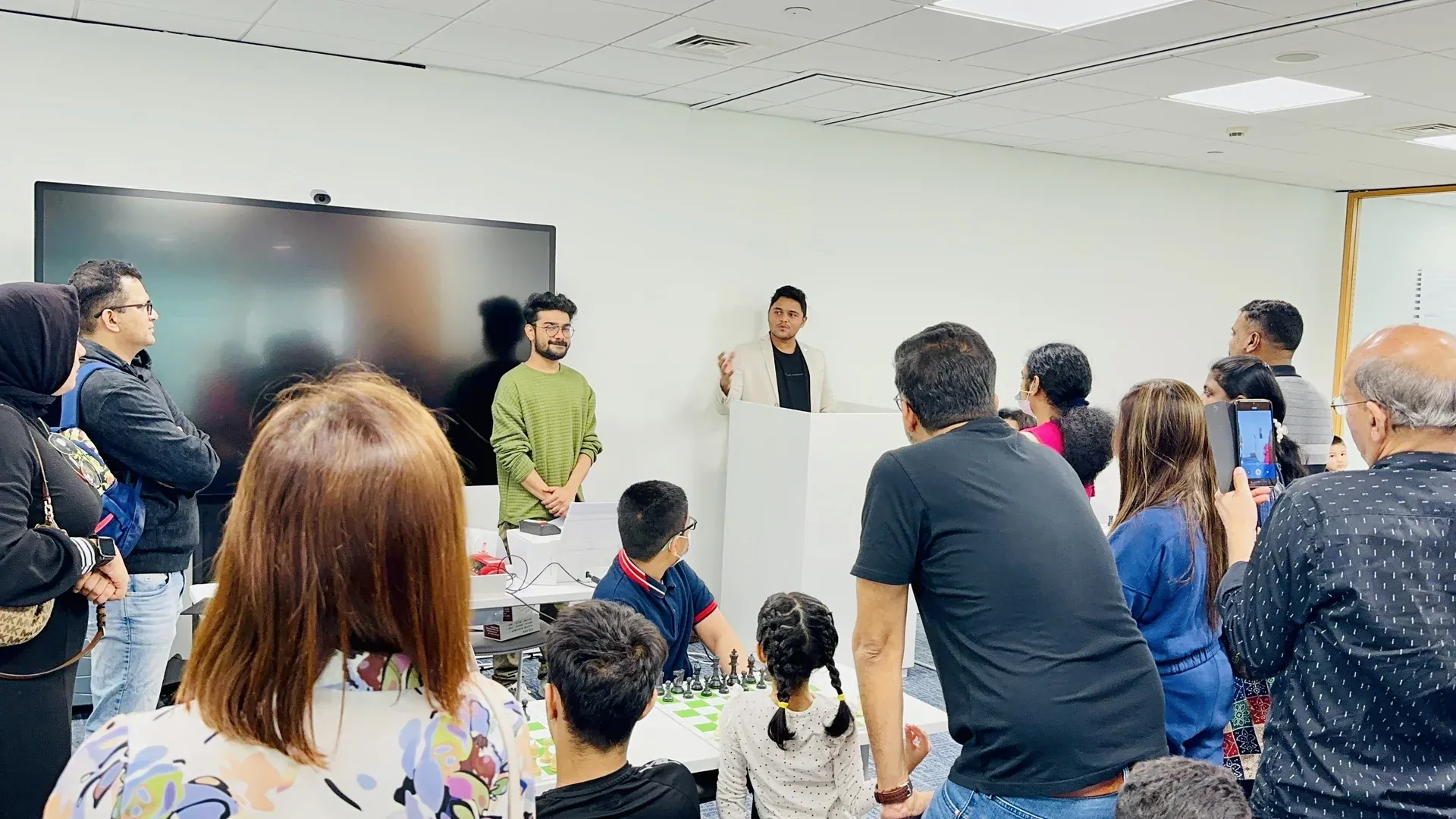
A well-run small group gives students a chance to compare ideas. One child may see a tactical check, another may notice a loose piece, and the instructor can guide the discussion toward the principle behind both choices. Students also get practice explaining their thinking and responding respectfully to a classmate. Peer games add a different kind of experience from solving a puzzle alone, because a real opponent makes choices that the student must answer.
Group format only helps when every student gets a meaningful role. Ask how students are matched by experience, what the maximum group size is, and how the teacher notices whether a quiet student understands. Find out how the coach handles a learner who is ready to move faster or needs a concept explained another way. A number on a class-size page is not enough: lesson design, turns at the board, and useful feedback determine whether the child participates rather than simply watches.
- How are students grouped by experience and learning goals?
- How often does each student solve, speak, and play during a lesson?
- What happens when a student needs more support or a greater challenge?
What private coaching can offer
In one-to-one coaching, the instructor can follow a student’s own questions for longer. A position from a recent tournament, a difficult opening choice, or a repeated time-management problem can become the centre of a lesson. The pace can change when the student needs another example, and the coach can ask questions tailored to the way that learner is thinking. This focus may be useful for a student with a specific event goal or a growing collection of games to review.
Private does not automatically mean personal or well structured. Ask how the coach prepares, what the student should bring, and how the lesson connects to a continuing plan. Clarify what independent practice is expected, how progress is shared with a parent, and how a student can ask for a different explanation. The goal is not for a teacher to talk for an hour while the student watches. Individual sessions still need interaction, relevant examples, and a clear link to the player’s own decisions.
Compare the learning experience side by side
Use a practical comparison rather than assuming one format is more serious. Ask what the student will actually do during a typical session and what kind of feedback they will receive afterwards. Include the child in this conversation when possible. A format that fits your budget but leaves the student disengaged is unlikely to be a good long-term choice; an intensive schedule that overwhelms the family may also be difficult to maintain. Think about the full routine, not a single lesson in isolation.
These are typical differences, not promises about every academy. A coach can adapt group teaching, and a private session can still include games and independent thinking. Use the table to form questions for the instructor, then compare the real program details. If the program operates online, ask how the student sees the board, takes a turn, and interacts. If classes are offered across several time zones, confirm the displayed session time against your household’s local time and the organizer’s daylight-saving policy.
You can also ask for a concrete example of how the same topic would be taught in both formats. If the topic is a simple fork, a group might let students find candidate moves on a shared board, explain why one piece attacks two targets, then play a short game to look for the pattern. In a private lesson, the coach might start from a fork the student missed in a saved game, reconstruct the position, and ask the player to calculate the opponent’s reply. The teaching goal can be similar while the route differs. This comparison helps a family understand the value of the format rather than choosing by label alone.
| Consideration | Small-group coaching | Private coaching |
|---|---|---|
| Peer learning | Students can discuss ideas and play classmates at a similar level. | Most discussion is between the student and coach. |
| Individual focus | The coach divides attention and should plan ways to check each learner. | More lesson time can centre on one student’s games and questions. |
| Pace | A shared plan works best when levels and goals are reasonably aligned. | The coach can adjust the pace more directly for the student. |
| Practical fit | Ask about cohort times, group size, and what happens if levels shift. | Ask about instructor availability, frequency, and price per session. |
Think about confidence and participation
Confidence is not simply whether a child speaks first. Some students want time to consider a move before sharing it; others gain energy from quick discussion. Ask your child which experience sounds comfortable and what would make it easier to participate. A good teacher can set expectations so learners listen to one another, take turns, and treat mistakes as part of analysis. In a group, ask how a student can request help without feeling embarrassed; in a private lesson, ask how the coach makes room for the student’s own questions.
Try not to choose a format based on an assumption that quiet children always need private lessons or outgoing children always belong in groups. A supportive peer setting can help one student warm up, while another may prefer a quieter first conversation. The assessment is a useful chance to observe the actual instructor. Notice whether they invite the child to think, wait for an answer, and respond kindly when it is incorrect. That behavior offers a more concrete signal than a general claim that a program builds confidence.
Compare cost and family logistics honestly
Compare what the tuition covers: session length, frequency, class size, materials, game review, parent updates, and any assessment included. A group rate may be lower per student, while private coaching may provide a different amount of individual attention. Avoid comparing one session price to another until you know the duration and what happens outside live class. Review the cancellation, rescheduling, and refund policies so an illness or family trip does not become an unexpected source of pressure.
Schedule matters too. Confirm all available times in your local time zone and consider the school-day routine, sibling activities, and the student’s energy. Ask how holidays and daylight-saving changes are handled when families are located in different U.S. zones or internationally. If a class meets at a time that repeatedly conflicts with family life, it may not be sustainable even if the curriculum looks appealing. You can review the academy’s current options on the group classes page and compare them with private coaching before making a decision.
Ask who teaches and how oversight works
An academy’s founder, head coach, and class instructor can be different people. If a program says it operates under an NM’s guidance, ask what that means for lesson planning, curriculum, instructor training, and student progress. Find out who will be in the online room with your child each week and whether that person is the same across the term. Families should not have to guess whether a credential shown on the homepage belongs to the instructor who actually teaches their session.
Ask for the instructor’s relevant experience with students of this age and level, and how the academy communicates when a teacher changes. A clear academy will explain the arrangement without overstating personal instruction or implying that a title guarantees a particular outcome. At Signa, the program information should make the teaching model easy to understand: coaching is offered under the guidance of NM Dilshad Mohammed, while families should confirm the assigned instructor and class details for the specific cohort they are considering.
Use a short trial and review the fit
If possible, arrange an assessment or trial that shows the student how the proposed class feels. A single session will not answer everything, but you can watch whether the child gets a chance to think, understands the instructor’s explanations, and feels comfortable asking a question. Afterwards, ask the child what they would like to do again and what they found difficult. Record the recommendation and any practical details so you can consider the choice calmly rather than deciding in the middle of a sales conversation.
Choose the format that matches the student’s current needs and the family’s capacity. Agree to revisit the decision after a sensible period, using participation, understanding, enjoyment, and the student’s own games as evidence. If the fit is wrong, ask whether the academy can change the group, pace, or format. Chess learning changes as a player develops; a good choice today does not need to become a permanent identity. Start with a clear plan, then adjust based on what happens at the board.
Keep it practical
What to take with you
- A well-matched level and thoughtful teaching matter more than the format label.
- Ask how each learner participates and receives feedback in a group.
- Compare total tuition, schedule, instructor, and missed-class policy before choosing.